
REVIEW · FRANCE
Tour Guide of an Essential Oil Distillery in the Drôme
The most interesting part of this Drôme visit is that you do not simply look at lavender fields and buy a bottle of oil. You follow the plant through the whole process, from the crop and drying area to the old stills and the final products in the shop. The distillery has worked here since 1930, and some of its restored equipment is still in use.
I like the hands-on scent workshop, where you learn to tell fine lavender, lavandin, and aspic apart by smell. I also like the chance to meet a guide who treats the distillery as a family story, not just a sales stop. The main consideration is timing: the visit begins at 2:30 pm, and the full experience can take from 90 minutes to about two and a half hours if you add time in the fields and shop.
Key points to know before you go
- Three lavender types, one clear lesson: Compare fine lavender, lavandin, and aspic in the fields and through scent.
- A working family distillery: Follow nearly a century of production, from the company’s founding in 1930 to current methods.
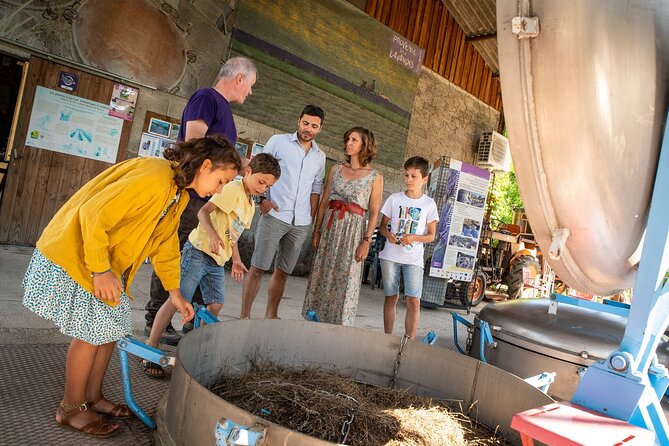
- Historic stills and modern technique: See restored equipment while learning about harvesting, evaporation, and oil production.
- A 2:30 pm start: Plan for a 90-minute guided visit, with extra time if you explore the fields and museum.
- A large local-produce shop: Choose from more than 300 French-made products, including oils, soaps, honey, biscuits, and jams.
- Strong value at $8.47: The price covers a guided look at the distillery, a scent activity, and access to the surrounding areas.
Lavender from field to still in the Drôme
This visit works best for people who want to understand what they are seeing. Lavender tourism can sometimes stop at a pretty field and a gift shop. Here, the plant is the subject of a practical lesson in farming, distillation, scent, and local commerce.
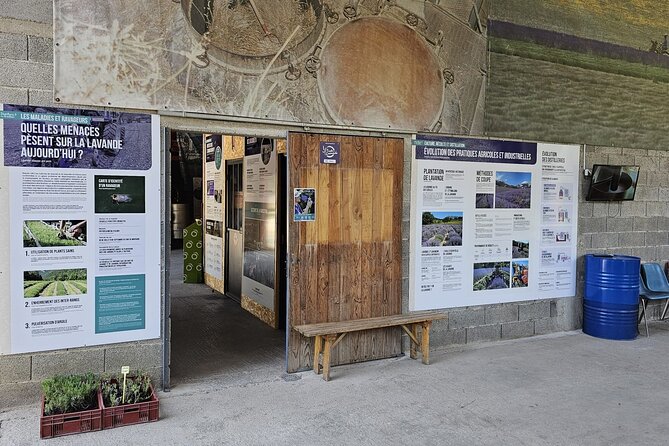
You start at Distillerie des 4 Vallées, in the heart of the Drôme region. The setting includes lavender fields, drying areas, historic stills, and views toward the Vercors mountains. You can expect the guide to place the distillery in its family story, beginning with its founding in 1930 and continuing through its current operation.
That background matters. It helps you see essential oil as a farm product rather than a vague wellness item. The tour explains how the crop is handled, how its aroma is extracted, and how the remaining floral water is used. You are not just told that lavender smells good. You learn why different plants produce different scents and products.
The visit is offered in English, and the staff can explain the subject clearly. One account describes a young female guide who gave explanations in another language at the group’s request and kept the mood light. Another describes a special two-hour visit with André, age 85, who shared the secrets of lavender and distillation with great enthusiasm. André may not be the guide on every date, so treat his appearance as a possibility, not a promise.
More Distillery Tours in the world:
- Dublin: Jameson Whiskey Distillery Tour with Tastings
★ 4.7 · 4,859 reviews - Dublin Jameson Distillery Bow St. Tour and Tasting 45 mins
★ 5.0 · 4,690 reviews - Dublin Jameson Distillery and Guinness Storehouse Guided Tour
★ 4.5 · 2,608 reviews
The first 90 minutes: fields, crops, and family history
The guided portion lasts about an hour and a half. It begins with the estate and its surroundings, including the lavender fields and the areas used to dry the harvested plants.
This opening is useful because it gives you a visual reference for the rest of the visit. You can look at the crops before hearing about their oils. The guide introduces the different types of lavender, including fine lavender, lavandin, and aspic. They are not simply three names to memorize. Their appearance and scent help explain why the distillery makes different products.
Fine lavender is especially important to the lesson because it is treated as distinct from lavandin and aspic. The visit lets you compare them in person instead of relying on a label or photograph. The olfactory workshop adds a simple, memorable test: smell the samples and try to identify the differences.
I like this part for families and mixed-age groups. A recorded visit says a group ranging from age nine to 74 enjoyed a roughly two-hour experience, which suggests that the subject does not require specialist knowledge. Children can focus on the smells and equipment, while adults can pay closer attention to farming and production.
The fields also give you a chance to take photographs with the Vercors mountains behind them. The best use of your time is to look closely before reaching for your camera. Lavender can look similar from a distance, but the purpose of the visit is to notice the differences among the plants.
Historic stills and the science of essential oil
The distillery’s stills are one of the strongest parts of the visit. The museum area contains fully restored historic stills that show how distillation methods have changed over time. Some of the historic stills are still used, which gives the equipment a practical connection to the working distillery.
The guide explains the process from harvested bundles to evaporation. You learn how heat and steam help release the aromatic compounds from the plant, and how the process produces both essential oil and floral water. The exact technical detail may depend on the guide and the group, but the focus is firmly on how the products are made.
This is where the visit becomes more valuable than a simple photo stop. You can connect what you smell in the workshop with what you see in the equipment. The fragrance in a bottle is no longer an abstract souvenir. It comes from a crop, a harvest, a drying stage, and a distillation method.
The tour also discusses traditional and modern techniques. That comparison gives you a sense of the distillery’s long working life without turning the visit into a formal museum lecture. The old equipment shows continuity, while the newer methods explain how the business operates today.
If you are interested in natural products, pay attention to the difference between essential oils and floral waters. The visit explains practical uses for both in everyday life. You can then ask the guide which product fits your needs rather than buying the first lavender item that catches your eye.
The extra 30 minutes: fields and museum at your own pace
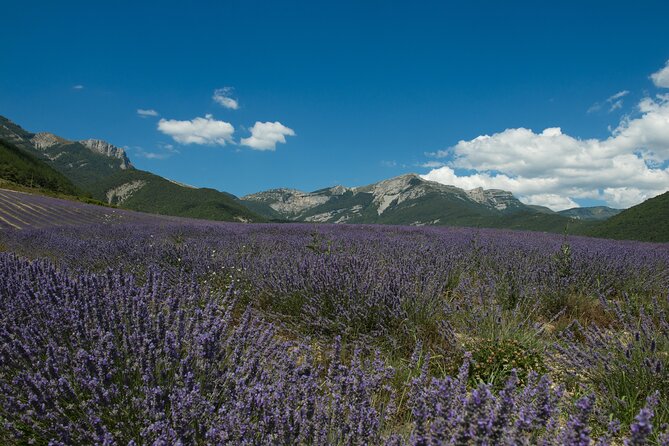
After the guided section, you can spend about 30 minutes exploring independently. This is not a second formal tour. It is time to walk near the lavender fields, enjoy the scent, and take photographs with the Vercors mountains in view.
You can also return to the museum area and examine the restored stills more slowly. That extra time suits anyone who likes machinery, local history, or photography. It also gives you room to ask follow-up questions if the main group moves quickly.
The free time is useful, but it is worth setting expectations. The supplied details do not promise a long hike, a large farm, or a full afternoon activity. Think of it as a short extension to the guided visit, not a separate countryside excursion.
Your total time can reach about two and a half hours if you take this option and browse the shop. If you need to leave at a fixed time, ask at the start how the day’s schedule is arranged. The published duration ranges from one hour and 30 minutes to two hours and 30 minutes.
More Guided Tours in the world:
- Dublin Irish Whiskey Museum and Gallery Guided Tour with Tasting
★ 5.0 · 3,078 reviews - Dublin Teeling Whiskey Distillery Guided Tour and Tasting 1 Hour
★ 5.0 · 1,765 reviews - The Scotch Whisky Experience Guided Whisky Tour – An Introduction to Whisky
★ 4.5 · 1,578 reviews - Guided Tour at the Curaçao Liqueur Distillery
★ 4.5 · 589 reviews
The final stop: more than 300 local products
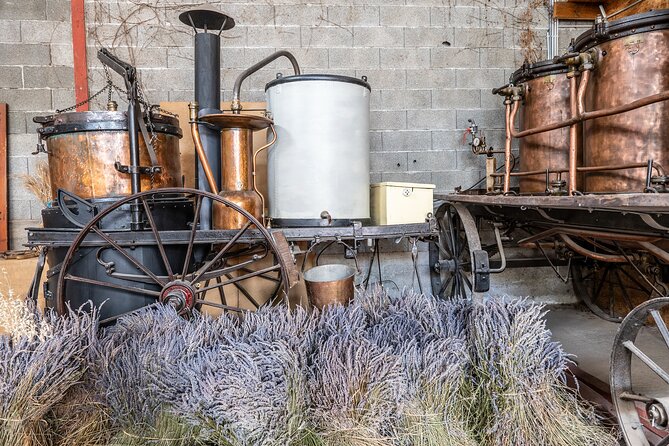
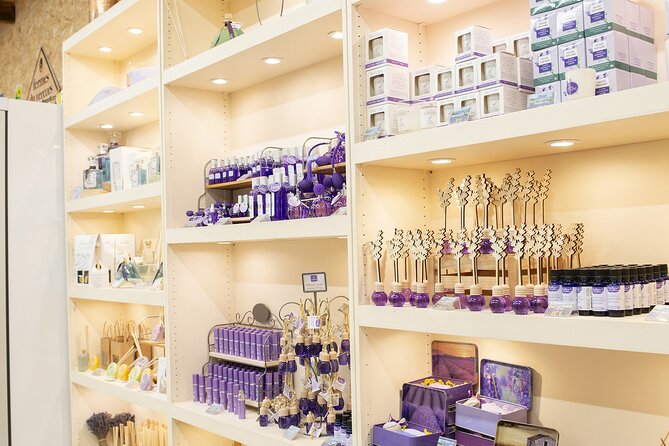
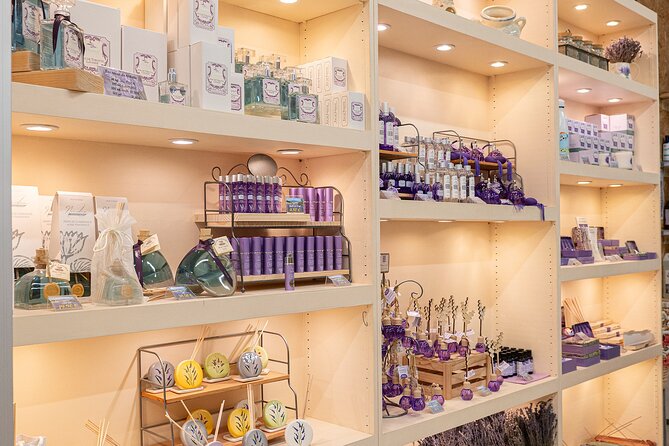
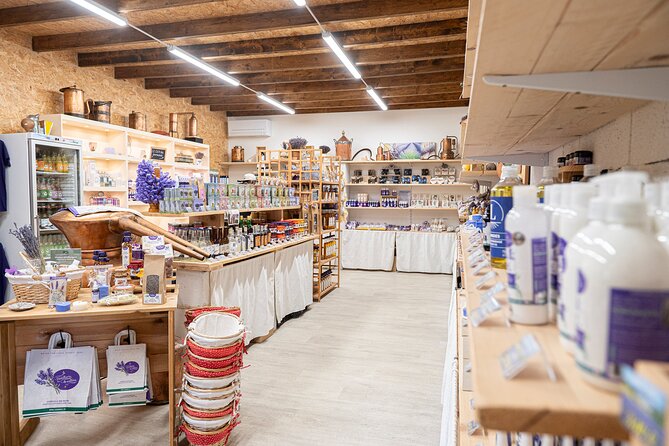
The producers’ shop sits next to the distillery and is part of the visit’s natural finish. It carries the distillery’s own essential oils, floral waters, syrups, and cosmetics, along with goods from other French and local makers.
The selection includes honey, jams, soaps, biscuits, and regional treats. That makes the shop useful for more than lavender souvenirs. You can choose something small and practical, or build a food-and-fragrance basket for friends at home.
I would wait until after the guided explanation before buying. Once you know the difference between fine lavender, lavandin, and aspic, the labels mean more. You can also ask about uses for a particular oil or floral water, which is better than guessing from packaging.
The shop is also the one part of the visit that may feel more commercial. That is not a serious flaw, since the distillery makes and sells its own products, but shoppers should not confuse the broad selection with the main purpose of the tour. The value comes from seeing production and learning how the products are made. The shop is an optional way to continue that lesson.
What the $8.47 price buys you
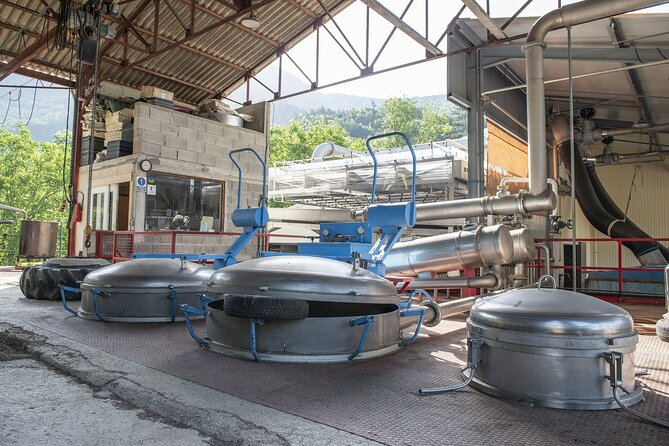
At $8.47 per person, this is a low-cost cultural stop. The price is especially good if you use the full visit: guided access to the distillery, the scent workshop, the fields, historic stills, and time in the producers’ shop.
The experience is not priced like a long excursion with transport, meals, or a full-day guide. No transportation is included in the supplied details, so you need to arrange your own way to the distillery. That keeps the price low, but it also means you should plan the visit as part of your own Drôme route.
The value is strongest for anyone already in the area. You get a focused introduction to lavender production without committing half a day. The guided portion is long enough to explain the work but short enough to fit beside other plans.
The low price also makes this an easy choice for a family or a group with mixed interests. Someone who enjoys food can browse honey and biscuits. A child can take part in the smell activity. An adult interested in farming, cosmetics, or machinery can spend more time with the stills.
Timing, language, and practical details
The stated start time is 2:30 pm. Set aside at least 90 minutes for the formal visit, and allow up to two and a half hours if you want time in the fields, museum area, and shop.
English is offered. The accounts of the guiding show a flexible approach to language, including clear explanations in another language when requested, but you should still confirm your preferred language when booking if that matters to you.
You receive confirmation at the time of booking, and the ticket is mobile. Service animals are allowed, and most people can take part. The information does not give detailed notes about paths, terrain, or step-free access, so anyone with specific mobility needs should ask the operator before arriving.
Free cancellation is available up to 24 hours before the 2:30 pm start for a full refund. Inside that 24-hour window, the payment is not refunded and changes are not accepted. The cut-off uses local time, so check the clock in France when making changes.
Who will enjoy this most
I would choose this for anyone who wants more than a field photograph. It suits couples, families, small groups, and anyone curious about how a familiar plant becomes a commercial product.
It is also a good fit for people who prefer a compact activity. You receive a clear subject, a short walk through the production process, and the freedom to spend extra time where your interest is strongest.
Children can take part, but the best family groups will include adults who can connect the scent exercise with the history and machinery. The age range described for one group, from nine to 74, shows how easily the subject can work across generations.
You may want to skip it if you dislike shops, scents, or short educational visits. The final stop gives you plenty of chances to buy products, and the experience depends on your interest in lavender and distillation. It is not a major historic site or a full farm day.
Should you book the Distillerie des 4 Vallées?
Book it if you are in the Drôme and want a practical look at lavender production at a very modest price. The best reasons are the three-part scent lesson, the working and restored stills, the family story dating to 1930, and the chance to speak with guides who clearly care about the subject.
Keep your expectations realistic. You will not receive transport or a full-day excursion, and the exact guide may vary. But for $8.47, an English visit beginning at 2:30 pm gives you a useful look at the crop, the distillation process, and the local products that come from it. Add the fields and shop, and this becomes an easy, worthwhile stop on a Drôme itinerary.
FAQ
Where does the tour take place?
The experience takes place at Distillerie des 4 Vallées in the Drôme region of France.
What time does the tour start?
The stated start time is 2:30 pm.
How long does the experience last?
The guided visit lasts about one hour and 30 minutes. With free time in the fields, the museum area, and the shop, the overall visit can last up to about two hours and 30 minutes.
Is the tour offered in English?
Yes. The experience is offered in English.
Which types of lavender will I learn about?
You will learn to distinguish fine lavender, lavandin, and aspic through the crops and an interactive scent workshop.
What can I see at the distillery?
You can see lavender fields, drying areas, historic stills, restored museum equipment, and the process of distillation from harvested bundles through evaporation.
Can I buy products after the tour?
Yes. The shop next to the distillery offers more than 300 artisanal and French-made products, including essential oils, floral waters, syrups, cosmetics, honey, jams, soaps, biscuits, and regional foods.
Can I cancel for a full refund?
Yes. You can cancel at least 24 hours before the start time for a full refund. Cancellations or changes made less than 24 hours before the start time are not accepted for a refund.
Just added around the world
- Zagreb: Fine Spirit Tasting & Distillery Tour★ 5.0 · 3 reviews
- York: Gin Tasting Experience at York Distillery★ 5.0 · 7 reviews
- VIP Skip-the Line Titanic Museum and Whiskey Tasting Tour★ 4.8 · 11 reviews
- Waiheke Island: HEKE Distillery & Brewery Tour with Tastings★ 5.0 · 2 reviews
- Hokkaido: Nikka Yoichi Whisky Museum Guided Tour & Tasting★ 4.7 · 4 reviews
- Uncle Nearest Green Distillery Tour from Downtown Nashville★ 4.5 · 12 reviews
- NON BUS Old Mission Wine And Distillery Sunset Tour – 4 STOP★ 5.0 · 2 reviews
- Craft Gin and exclusive brandies in unique distillery★ 5.0 · 8 reviews
France Whisky Tours, compared.
Lavender Field & Distillery Tour between Nimes & Arles
Read our review →
Guided tour Distillery of Lavender between Nîmes & Arles
Read our review →
Pont-l’Évêque: DISTILLERIE PERE MAGLOIRE Entry with Tastings
Read our review →
Paris Craft Distillery Make Your Own Gin Workshop
Read our review →
Distillerie Les 1309: Between tradition and modernity – close to Cognac
Read our review →
Guided Tour and Tasting at the Distillerie Baccae Paris
Read our review →
Private tour from Cognac – Cognac Distillery & Bordeaux Winery with a workshop
Read our review →Browse the lists this tour appears in