REVIEW · WHISKY &
7 days Kilimanjaro climb via Machame route (Whiskey route)
Kilimanjaro’s Machame Route gives you the mountain’s most varied scenery in one hard-working week, from wet rain forest to volcanic rock, snow, and sunrise at Uhuru Peak. I like the route’s excellent acclimatization pattern, especially the climb to Lava Tower followed by a descent to Barranco, and I like that meals, tents, water, park fees, and rescue fees are built into the price.
The catch is simple: seven days is demanding. Machame is steep, summit night is long, and the early sections can turn into mud after rain. This suits a fit, determined hiker far better than someone seeking a gentle introduction to high altitude.
Key points to know before booking
- Machame gives you Kilimanjaro’s most dramatic scenery, including rain forest, moorland, alpine desert, glaciers, and summit snow.
- Lava Tower is the key acclimatization day, taking you to 4,630 meters before dropping to Barranco Camp.
- Summit night begins around 11:30 p.m., with a steep, cold ascent to Stella Point and Uhuru Peak.
- The price includes the major mountain costs, including park and rescue fees, meals, purified water, tents, guides, and a mess tent.
- The group can reach 16 people, so ask about your expected group size and guide-to-climber ratio before paying.
- Guide support is a major part of the experience, with Gasto, James, and David named in past trip accounts, and Lucas handling many arrangements.
Why the Machame Route is worth the effort
Machame is known as the Whiskey Route, a nickname that hints at its rougher character compared with Kilimanjaro’s easier-going Coca-Cola Route. That does not mean you need to be an elite mountaineer. It does mean you should be ready for steep trails, slow uphill walking, cold nights, basic washing conditions, and one very long summit day.
I like the way the route changes scenery almost daily. You start in thick forest, walk across open moorland, pass through a dry volcanic zone, and finish among ice, scree, and high-altitude rock. The variety keeps the climb interesting when your legs begin asking serious questions.
I also like the itinerary’s high and low rhythm. On Day 3, you climb to Lava Tower at 4,630 meters, then descend to sleep at Barranco. That is useful preparation for the summit because your body gets time at a higher altitude without forcing you to sleep there.
The $2,300 price deserves a careful look. It covers the park fees, rescue fees, mountain crew, food, purified water, private four-season tents, mess tent, and chairs. Flights, personal climbing gear, and tips are extra, so the final cost will be higher. Still, the included items cover much of what makes a Kilimanjaro climb expensive. Before booking, ask for a clear tipping recommendation and a detailed gear list.
A few more whisky tours around the world worth a look
- KILIMANJARO MACHAME ROUTE, (Climb 7days) “Whiskey” route
★ 5.0 · 3 reviews
Day 1: Machame Gate and the wet rain forest
You begin in Arusha at about 1,400 meters, with pickup after breakfast and a drive toward Machame Village. The village is your last practical place in this itinerary to buy mineral water, and you receive a packed lunch there.
The road from the village to Machame Gate may be passable, but poor conditions can leave you walking the final three kilometers. That walk takes about an hour and can be muddy. This is one reason to wear shoes you trust and keep rain protection easy to reach, not buried at the bottom of your bag.
After registration at the gate, the trail enters the rain forest almost at once. The first day takes about seven hours and ends at Machame Camp. The forest is beautiful, but wet weather can turn the path into slippery mud. Rain here is not a small possibility, so waterproof clothing is practical equipment, not a luxury.
The packed lunch arrives at a welcome stop roughly halfway up. After that, the trail continues through trees toward camp. Your support team sets up the tents, boils water for drinking and washing, and prepares dinner.
This first day is not the highest or most technical part of the climb, but it establishes the pace. Walk slowly. You have six more days ahead, and the mountain rewards patience more than speed.
Day 2: Moorland views and the Shira Plateau
Day 2 leaves the forest behind and enters the moorland zone. The hike takes about six hours and covers roughly nine kilometers, with the trail climbing for about an hour before easing into a gentler two-hour section.
The change in scenery is one of Machame’s strong points. Trees give way to open ground, rocky ridges, and wide views. You may see the Western Breach and its glaciers to the east, a striking reminder that the summit is still far above you.
After lunch and a rest, you continue toward the Shira Plateau and Shira Camp at about 3,840 meters. The camp is exposed, and temperatures can fall well below freezing. Your tent is described as a waterproof, four-season mountain tent, but you still need warm layers, a hat, dry socks, and a sleeping bag suited to high-altitude nights.
The crew supplies drinking and washing water. That support matters because you are not carrying every meal and every liter from the trailhead. It also means you should treat water carefully and keep a personal bottle or hydration system accessible during the day.
Day 3: Lava Tower and the descent to Barranco
Day 3 is the toughest acclimatization day before the summit push. You walk into a semi-desert, rocky zone and climb toward Lava Tower, reaching about 4,630 meters after roughly five hours.
This is where altitude symptoms can begin. Breathlessness, headaches, and irritability are specifically noted as possible problems. Do not try to hide symptoms to impress the group. Tell your guide early, follow the walking pace, and take any instruction about rest or descent seriously.
Lunch is served near Lava Tower before you descend about 680 meters to Barranco Camp. The stated hiking time is about six hours. The climb high and sleep lower pattern is one of the best features of the seven-day plan, since it gives you exposure to altitude without making you spend the night at the day’s highest point.
Barranco Camp sits below the Great Barranco Wall. You may arrive tired, but the setting is memorable, with steep volcanic formations rising around camp. This is also a day when the route’s difficulty becomes clear. The air is thinner, the ground is rocky, and you are no longer simply walking uphill through forest.
Same region, a different dram:
- Edinburgh: The Scotch Whisky Experience Tour and Tasting
★ 4.7 · 5,213 reviews - Dublin: Jameson Whiskey Distillery Tour with Tastings
★ 4.7 · 4,859 reviews - Dublin Jameson Distillery Bow St. Tour and Tasting 45 mins
★ 5.0 · 4,690 reviews - Melbourne: Yarra Valley Wine, Gin, Whisky and Chocolate Tour
★ 5.0 · 3,667 reviews
Day 4: Climbing the Great Barranco Wall
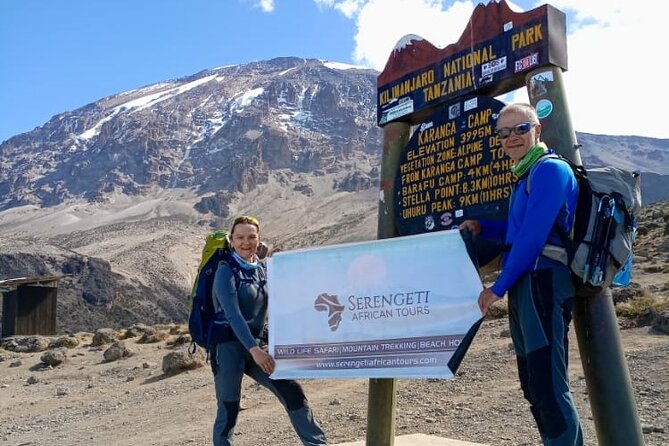
Day 4 covers about five kilometers and takes roughly four to five hours, though the daily schedule lists about six hours with stops and camp time. The main event is the Great Barranco Wall.
It can look intimidating from below. The route is described as a Class 2 hike, and the practical point is that it involves hands-on scrambling rather than technical climbing with ropes. Move carefully, keep your hands free, and follow the guide’s line instead of rushing to pass other climbers.
At the top, you get views of Heim Glacier and the clouds below. The trail then rises and falls through Karanga Valley. This is a shorter day, which makes it valuable for acclimatization and recovery.
I like this part of the route because it breaks up the hard climb with a day that feels more varied than simply walking uphill. You still gain altitude, but you also get time to eat, rest, and prepare for the final push.
Day 5: Barafu Camp and the wait for summit night
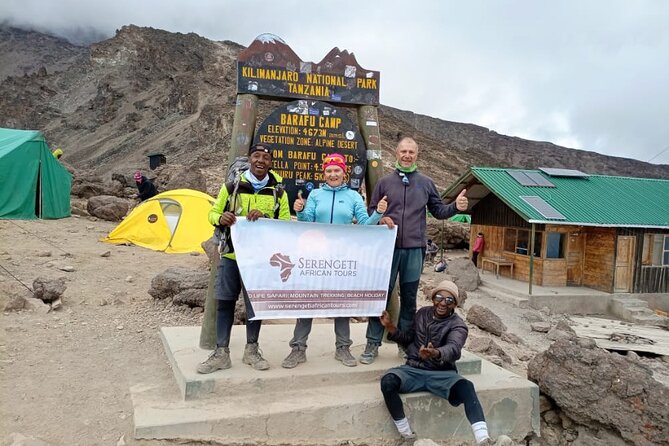
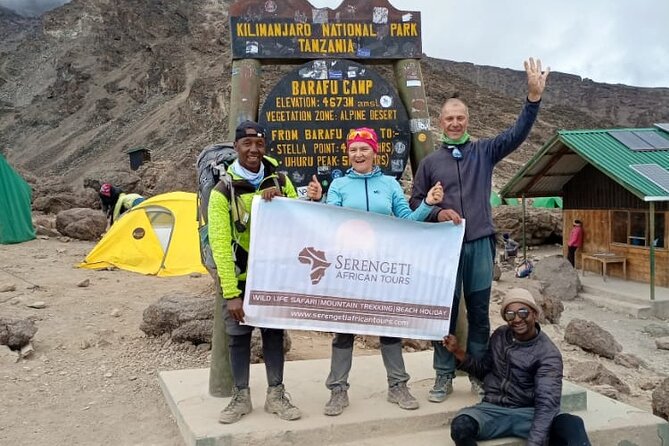
Day 5 is short by distance, about four kilometers and two to three hours of hiking. You leave Karanga Camp at approximately 3,959 meters and climb toward Barafu Hut and Barafu Camp at about 4,550 meters.
The route meets the Mweka Route, which you use during the descent. Barafu means ice in Swahili, and the camp sits on an exposed rocky ridge. Wind, cold, and loose rocks make it important to understand the camp layout before darkness arrives.
Barafu is the last water stop for the porters. There is no accessible water at the camp itself, so your support team must carry supplies upward. This is one reason the included purified water is valuable, and one reason you should fill bottles and organize your personal kit before settling in.
Dinner is served early, then you rest. The schedule calls for rising around 11:30 p.m. Summit night is not a normal hiking day. You need to eat what you can, keep warm, and make sure your headlamp, gloves, warm layers, and water are ready before sleep.
Day 6: Stella Point, Uhuru Peak, and the long descent
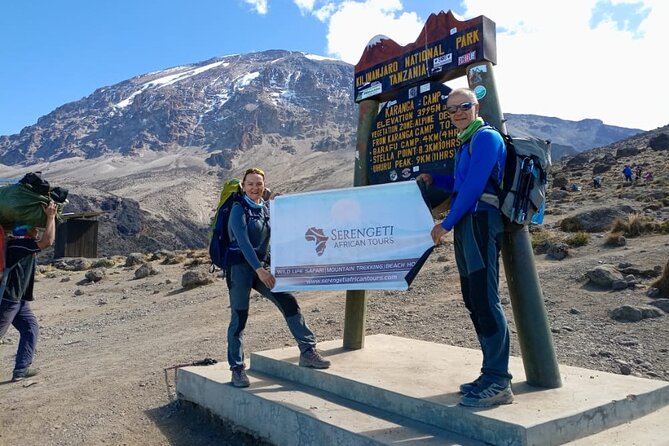
Summit day begins in darkness with tea and biscuits. The route heads northwest through heavy scree toward Stella Point at 5,685 meters. The climb to Stella Point takes about six hours and is described as the most mentally and physically difficult part of the route for many climbers.
The slow pace matters here. You may take several steps, pause, breathe, and repeat. The goal is steady progress, not speed. The guide team’s experience becomes particularly important during this section, and past climbs with Gasto, James, and David have placed strong emphasis on guiding climbers toward the summit.
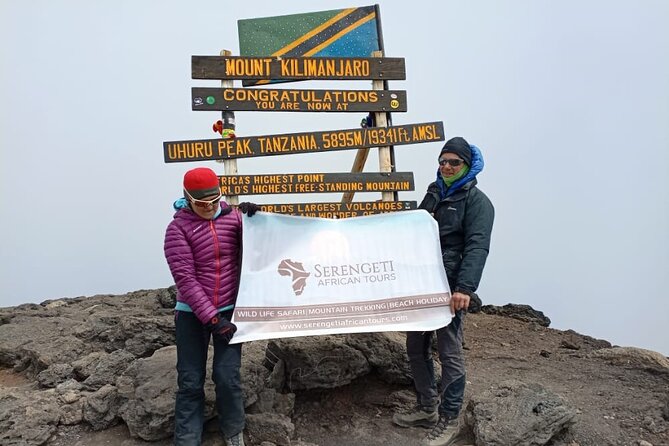
At Stella Point, you can rest briefly and watch sunrise if weather permits. From there, the route continues along the crater rim for about two hours toward Uhuru Peak at 5,895 meters. Snow is normally present on this upper section, though weather conditions can affect what you see.
The summit stay is short. Cold, wind, altitude, and fatigue all argue for taking photographs, enjoying the achievement, and beginning the descent when your guide says it is time. You then descend to Barafu for a rest before continuing to Mweka Camp, according to the stated plan.
This is an extremely long day, and the supplied schedule lists about six hours, but the summit section alone is described as roughly six hours to Stella Point plus two more hours to Uhuru Peak. Treat Day 6 as a full endurance day, not a neatly timed outing. Your actual pace and rest periods will affect the finish.
Day 7: Forest descent, certificates, and the Mweka Gate
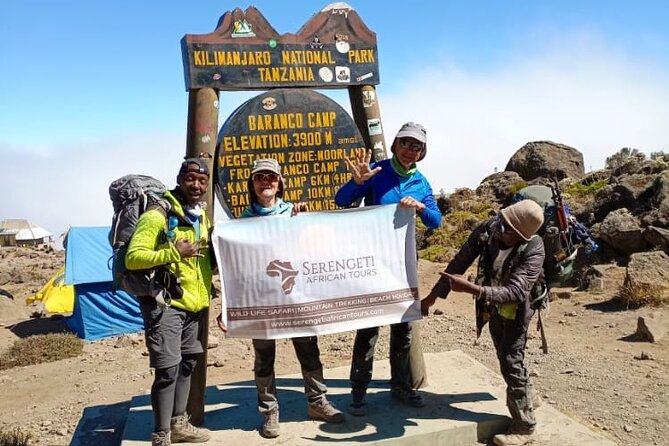
After breakfast, the mountain crew holds a celebration with dancing and singing. This is also the point when tips are presented to the guides, assistant guides, cooks, and porters. Tips are not included in the $2,300 price, so prepare for that additional expense.
The descent to Mweka Gate takes about three hours and covers roughly 15 kilometers through forest. Descending can be hard on tired knees, even though breathing is easier than at altitude. Trekking poles can be useful if you bring personal gear.
At the park office, climbers sign their names and receive certificates. Reaching Stella Point earns a green certificate, while reaching Uhuru Peak earns a gold certificate. Afterward, the itinerary continues for about an hour and three kilometers to Mweka Village.
The final transfer returns you to the meeting point in Arusha. Confirm the exact timing with Serengeti African Tours, since the published start time is shown as midnight while the Day 1 plan begins with an early breakfast and pickup.
Food, tents, water, and the mountain crew
Food is included for all seven breakfasts and lunches, plus six dinners. The meals are described as fresh, nutritious, and served in generous portions. A mess tent with tables and chairs gives you a place to eat away from the sleeping tent, which is welcome after a wet or cold day.
Purified drinking water is provided. You should still bring a refillable bottle or hydration system and ask how much carrying capacity you need each day.
The company says it provides fair and ethical treatment of porters. That matters on Kilimanjaro, where the crew carries tents, food, fuel, water, and other supplies. I would ask directly about porter welfare, load limits, wages, and tipping before departure. Good treatment is part of the value of a mountain trip, not a side issue.
The group maximum is 16 people. That is large enough for a social climb but may feel busy on narrow or steep sections. Ask how many guides and assistant guides will be assigned to your group, especially if members have different hiking speeds.
Who should book this climb?
This trip fits you if you have moderate physical fitness and some hiking, backpacking, or high-altitude experience. You should be comfortable walking for several hours on consecutive days and handling cold, wet, muddy, rocky, and basic camping conditions.
It is a good choice if scenery matters as much as the summit. Machame gives you more visual variety than a route that stays in one type of terrain, and the Barranco Wall and Lava Tower add memorable stages to the climb.
I would think twice if you dislike steep trails, exposed camps, or sleeping in cold conditions. I would also be cautious if you are choosing the route only because it is popular. Popular does not mean easy, and the seven-day version leaves less time than longer itineraries for acclimatization.
Price, group size, and practical value
At $2,300 per person, the package includes the costs that can otherwise surprise you: national park fees, rescue fees, professional mountain guides, meals, tents, a mess tent, chairs, and purified water. Pickup is offered from Arusha, and group discounts may be available.
You still pay for flights, personal climbing gear, and tips. A mobile ticket is offered, and confirmation is received at booking. Free cancellation is available if you cancel at least 24 hours before the local start time. Changes or cancellations inside that window are not accepted for a refund.
The strongest value here is the support system. A Kilimanjaro climb is not just a trail and a summit. It is food, water, shelter, permits, safety planning, porters, cooks, and guides working every day. Get the exact inclusions and tipping guidance in writing before you commit.
Should you book the seven-day Machame climb?
Book it if you want a scenic, demanding Kilimanjaro route and you are ready for a serious summit night. The itinerary has a sensible Lava Tower acclimatization day, strong scenery, organized mountain support, and a clear descent route.
Choose a longer climb if you are new to altitude or prefer more time to adjust. If you book this one, arrive prepared for rain, cold, mud, scree, and a very early summit start. Ask for the final packing list, guide-to-climber ratio, tipping guidance, and confirmation of the pickup time. Those answers will tell you as much about the operation as the attractive itinerary does.
FAQ
Where does the Kilimanjaro climb start?
The activity starts in Arusha, Tanzania, with pickup offered from your hotel or meeting point.
How long is the Machame Route climb?
The climb lasts approximately seven days and ends back at the meeting point after the descent.
What is the maximum group size?
The maximum group size is 16 people.
What is included in the price?
The price includes private waterproof four-season mountain tents, professional mountain guides, park fees, rescue fees, meals on the mountain, a mess tent with tables and chairs, fresh food, and purified drinking water.
Are meals included every day?
Yes. The package includes seven breakfasts, seven lunches, and six dinners while you are on the mountain.
What is not included?
Flights, personal climbing gear, and tips are not included.
How high is Uhuru Peak?
Uhuru Peak is at 5,895 meters. Stella Point on the crater rim is at 5,685 meters.
What happens if I cancel?
You can receive a full refund if you cancel at least 24 hours before the experience start time. Cancellations or changes made less than 24 hours before the local start time are not accepted for a refund.
Just added around the world
- Zagreb: Fine Spirit Tasting & Distillery Tour★ 5.0 · 3 reviews
- York: Gin Tasting Experience at York Distillery★ 5.0 · 7 reviews
- VIP Skip-the Line Titanic Museum and Whiskey Tasting Tour★ 4.8 · 11 reviews
- Waiheke Island: HEKE Distillery & Brewery Tour with Tastings★ 5.0 · 2 reviews
- Hokkaido: Nikka Yoichi Whisky Museum Guided Tour & Tasting★ 4.7 · 4 reviews
- Uncle Nearest Green Distillery Tour from Downtown Nashville★ 4.5 · 12 reviews
- NON BUS Old Mission Wine And Distillery Sunset Tour – 4 STOP★ 5.0 · 2 reviews
- Craft Gin and exclusive brandies in unique distillery★ 5.0 · 8 reviews
Whisky & Whiskey Tours, compared.
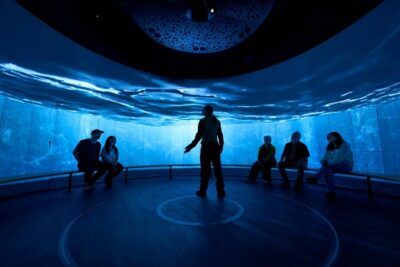
Edinburgh: The Scotch Whisky Experience Tour and Tasting
Read our review →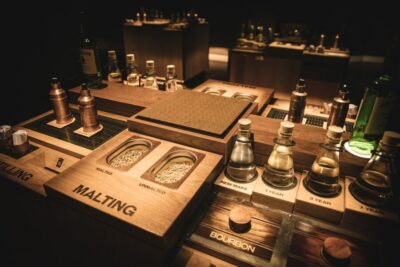
Dublin: Jameson Whiskey Distillery Tour with Tastings
Read our review →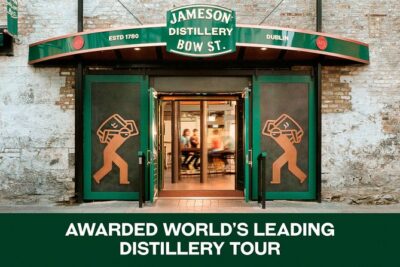
Dublin Jameson Distillery Bow St. Tour and Tasting 45 mins
Read our review →
Dublin Irish Whiskey Museum and Gallery Guided Tour with Tasting
Read our review →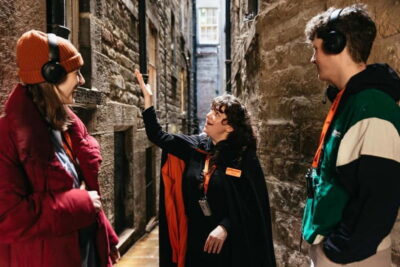
Edinburgh: Underground Vaults Evening Ghost Tour with Whisky
Read our review →
Dublin Jameson Distillery and Guinness Storehouse Guided Tour
Read our review →
Edinburgh: Whisky Tasting with History and Storytelling
Read our review →