REVIEW · DISTILLERY TOURS
Soju Tasting at Distillery – story of 3 pigs
The most interesting part of this Seoul tasting is that you are not sampling ordinary green-bottle soju. You visit a working distillery closed to the public, learn how traditional rice alcohol becomes distilled spirit, and taste premium soju that can reach 45% alcohol or more. Sam Lee leads the session with humor, history, and plenty of practical advice.
I like the chance to compare at least seven Korean drinks in one sitting, and I like the story behind Samhae soju, a Joseon-era spirit once favored by the noble class. The small group, usually capped at 10 people, also gives Sam time to answer questions and keep the mood conversational.
The main consideration is the short running time. Ninety minutes is enough for a brisk introduction and a generous tasting, but you may wish for longer once the conversation gets going. Eat before you arrive, pace yourself, and remember that several samples are much stronger than standard commercial soju.
Key points to know before booking
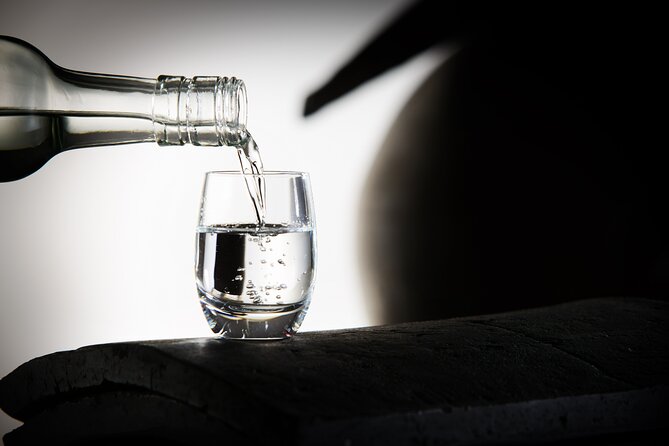
- Traditional soju, not just the familiar green bottle: Taste high-proof spirit made in a more traditional style, alongside other Korean alcohols.
- A real distillery setting: The session takes place inside Samhae Soju in Seoul’s Mapo-gu district, in a space not generally open to the public.
- Seven or more samples: Expect a range of Korean alcohols, including different soju styles and flavored varieties.
- A strong historical thread: Learn about Samhae soju, a rice-heavy Joseon spirit connected with Korea’s noble class.
- Sam Lee leads the tasting: He explains the process, answers questions, and often shares food and Seoul recommendations.
- Plan for a potent 90 minutes: Premium pours begin around 45% alcohol, so a meal beforehand is sensible.
What makes this soju tasting different
Korean alcohol is often reduced to the familiar green bottle found in convenience stores and restaurants. This experience gives you a useful correction. The common commercial version is generally a diluted spirit with added sweetener, while traditional soju is a distilled drink with far more character and strength.
The tasting also puts soju into the wider Korean drinking tradition. You learn about three broad categories:
- Takju, an unfiltered rice wine
- Cheongju, a clear filtered rice wine
- Soju, a distilled spirit
That framework matters because it helps you understand the order of production. Rice fermentation can produce different drinks depending on how the liquid is handled, filtered, and distilled. You are not simply lining up seven unrelated glasses. You are comparing stages, styles, aromas, and levels of strength.
I find that useful for anyone who has enjoyed Korean food but never had a clear sense of what sits behind the country’s famous drinking culture. The lesson stays tied to the tasting, so it does not feel like a classroom lecture.
More Distillery Tours in the world:
- Dublin: Jameson Whiskey Distillery Tour with Tastings
★ 4.7 · 4,859 reviews - Dublin Jameson Distillery Bow St. Tour and Tasting 45 mins
★ 5.0 · 4,690 reviews - Dublin Jameson Distillery and Guinness Storehouse Guided Tour
★ 4.5 · 2,608 reviews
Entering Samhae Soju in Mapo-gu
You meet at Samhae Soju, at World Cup buk-ro 109, basement level 1, in Seoul’s Mapo-gu district. The location is near public transportation, which makes it practical to reach without arranging a private car.
The activity begins and ends at the distillery. That simple setup is helpful because you do not lose time moving between several stops. The tradeoff is that this is a focused visit, not a neighborhood walking tour. Your main experience takes place indoors at the production site.
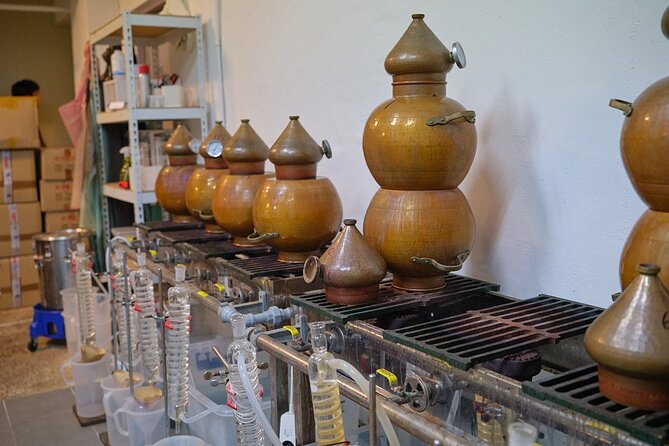
The distillery is not open to the general public in the usual way, so the setting gives the tasting a sense of access that a retail bar cannot match. You may see working parts of the process and fermentation in progress, rather than only finished bottles on a shelf.
The room is best understood as a production space first and a polished cocktail lounge second. If you are looking for sleek design, elaborate food pairings, or a large visitor center, this may feel plain. If you want a direct look at a small Korean distillery, the simplicity works in its favor.
The story of Samhae soju and the three pigs
The historical portion centers on Samhae soju, a spirit associated with the Joseon dynasty, which lasted from 1392 to 1894. It was once a favored drink among the noble class, but its production required a large amount of rice.
That heavy use of rice made Samhae soju difficult to keep producing during periods of famine. The drink’s story is therefore tied not only to taste and status, but also to the realities of food supply and Korean life.
The current master, Hyeonjong Kim, trained for more than 10 years under master Taeksang Kim, who had inherited and preserved the family recipe. Taeksang Kim died in 2021, giving the tasting an added sense of continuity. You are learning about a recipe that survived through personal teaching rather than simply reading a label on a modern bottle.
The name of the experience refers to the story of three pigs, though the supplied details do not spell out every part of that tale. Sam’s presentation connects the name with the distillery and the traditions around Korean alcohol. Expect stories and conversation rather than a formal museum-style account.
From rice fermentation to high-proof spirit
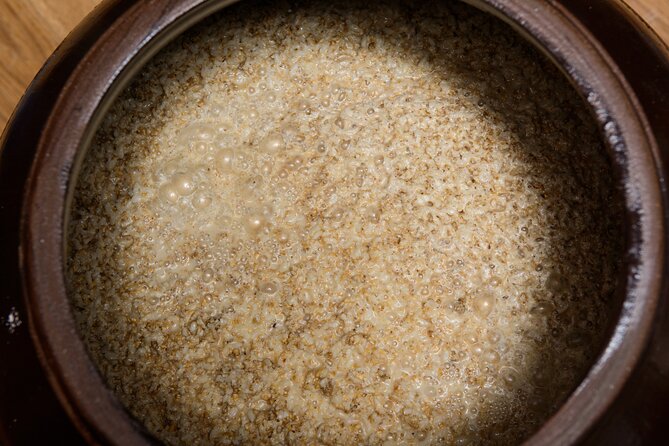
The production explanation is one of the strongest reasons to book this activity. You learn how Korean alcohol begins with rice and fermentation before some of it becomes clear rice wine or distilled soju.
The tasting may include a look at fermentation in progress. That gives you a better sense of the drink as a living process, rather than an industrial product that appears fully formed in a bottle.
The distinction between traditional and commercial soju becomes clear through strength. The premium pours here are 45% alcohol or higher, which is about 90 proof or more. That is a serious jump from the low-strength soju commonly served in casual restaurants.
You should not treat these as large drinks. The point is to compare small pours and notice how the spirit changes from one sample to the next. Some varieties include added aromas or special flavoring, giving you a chance to compare clean spirit with more perfumed styles.
The supplied details do not specify the exact labels or pour sizes, so the selection can vary. What you can count on is at least seven Korean alcohols made by a master distiller, with traditional soju as the main focus.
A few more whisky tours around the world worth a look
- Edinburgh: The Scotch Whisky Experience Tour and Tasting
★ 4.7 · 5,213 reviews - Melbourne: Yarra Valley Wine, Gin, Whisky and Chocolate Tour
★ 5.0 · 3,667 reviews - Dublin Irish Whiskey Museum and Gallery Guided Tour with Tasting
★ 5.0 · 3,078 reviews - Edinburgh: Underground Vaults Evening Ghost Tour with Whisky
★ 4.7 · 2,685 reviews
How the 90-minute tasting unfolds
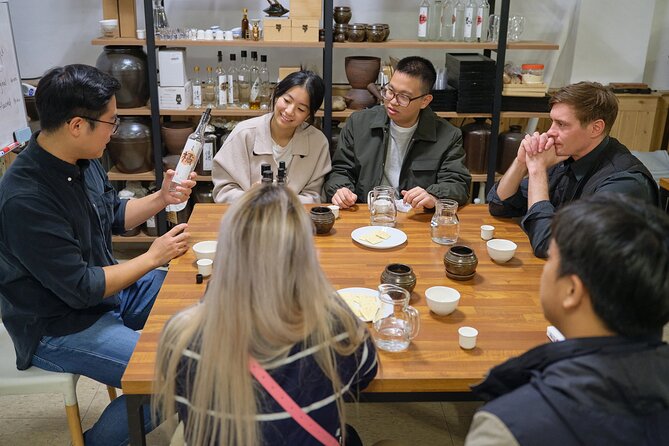
The session lasts about one hour and 30 minutes. The first part is devoted to Korean alcohol categories, the distillery, and the background of Samhae soju.
Sam Lee explains the basic production methods and the cultural habits tied to drinking. He also answers questions throughout the tasting, rather than saving everything for a final lecture. That makes the experience feel more like a relaxed conversation around a table.
The tasting then moves through multiple samples. You may try different levels of strength, various soju styles, and other Korean drinks before finishing with stronger premium pours. The order matters, since it gives your palate a chance to understand how fermentation, filtration, distillation, and flavoring affect the final drink.
Several people have found the session relaxed enough to make new friends in the group. That social side is part of the design. The group limit is listed as a maximum of 10 people, while the description also refers to groups of up to 12, so the precise size may depend on the booking arrangement. Either way, it is intended to be a small-group experience, not a large tasting hall.
If you are visiting alone, keep in mind that the social experience depends partly on the group you join. Sam can guide the discussion, but he cannot guarantee that every person will engage equally. A solo visitor may have a better time by asking questions early and joining the conversation instead of waiting for others to take the lead.
Sam Lee’s role in the experience
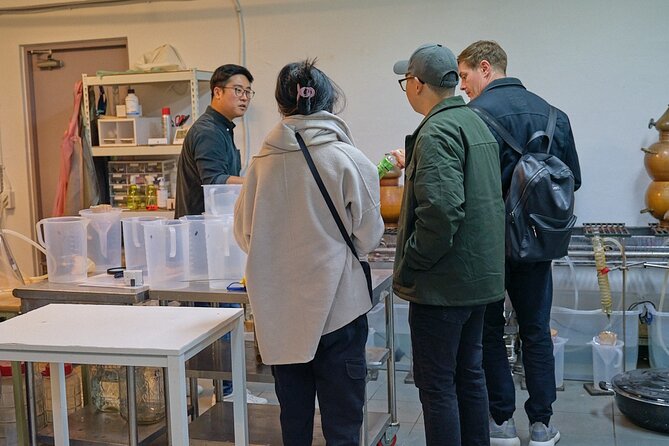
Sam Lee is more than a person pouring samples. He explains the making of soju, gives historical context, and talks about Korean manners and drinking culture. His style is informal, funny, and patient, which suits a tasting where questions can range from technical details to restaurant customs.
The practical advice after the tasting is another useful touch. Sam has shared suggestions for restaurants and places to visit in Seoul, as well as food ideas that work well with Korean alcohol. Those recommendations are not a separate tour, but they can help you plan the rest of your evening.
The host’s personality matters here because the distillery itself is not presented as a large attraction with many exhibits. Much of the value comes through explanation and conversation. If you prefer a self-guided tasting with printed notes and little discussion, this may not be your ideal format.
If you enjoy asking why one soju tastes softer, stronger, cleaner, or more aromatic than another, you should get a lot from Sam’s approach. He is also willing to explain the production process more than once, which helps when the alcohol starts to blur the finer points.
Is $43.83 good value?
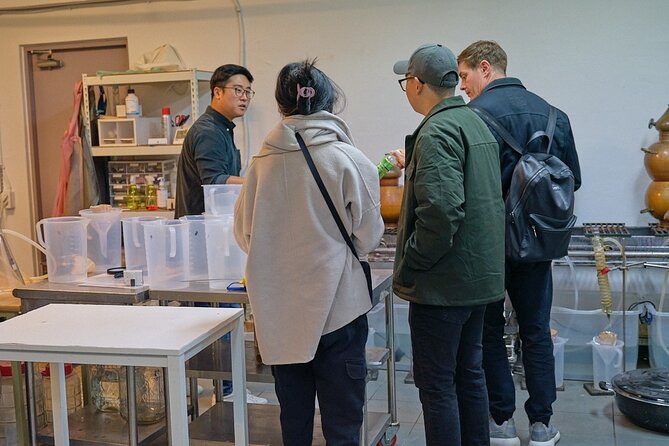
At $43.83 per person, the price is reasonable if you want more than a few drinks. You are paying for a 90-minute hosted session, access to a distillery that is not generally open to the public, a history lesson, an explanation of production, and at least seven samples.
The value is strongest for people who would otherwise buy several bottles or visit multiple bars trying to understand traditional soju. Here, you can compare a range in one place and get context for what you are tasting.
It is less compelling if you only want a quick drink or a standard Korean nightlife stop. The familiar green bottle is easy to find throughout Seoul for far less money. This experience is about learning why traditional soju is different, not getting the cheapest alcohol.
Food is not listed as part of the tasting. Eat something before you arrive, since the pours are numerous and some are 45% alcohol or stronger. You may receive food and restaurant suggestions from Sam, but you should not book this expecting a full meal or formal pairing menu.
Who should book this experience?
I would recommend it most strongly to:
- People who like spirits and want to compare high-proof Korean soju
- Visitors curious about traditional production rather than mass-market alcohol
- Anyone interested in Korean food customs, drinking manners, and cultural history
- Couples and small groups looking for an indoor Seoul activity
- Solo visitors who are comfortable joining a social tasting and asking questions
- Returning Seoul visitors who have already seen the major sights
You do not need to be a soju expert. In fact, the session may be most useful if your only previous experience is with restaurant soju. The contrast between commercial and traditional styles gives you a clear point of reference.
You may want to skip it if you dislike strong spirits, prefer nonalcoholic cultural activities, or want a long tour with several city stops. The tasting is compact, indoors, and centered on alcohol. It is not designed as a general introduction to Mapo.
Practical details that affect your visit
Confirmation is provided when you book, and the ticket is mobile, so you can keep it on your phone. The meeting point is Samhae Soju, and the activity returns to that same location.
The experience requires good weather. If poor weather causes a cancellation, you are offered another date or a full refund. Otherwise, the booking is non-refundable and cannot be changed for any reason, so check your schedule before paying.
The activity is near public transportation, but the provided information does not identify a particular station or give detailed directions from central Seoul. Allow enough time to find the basement-level location at World Cup buk-ro 109.
There is no stated accessibility information, so contact the provider before booking if you have mobility or access needs. For a private group, Sam can arrange a private booking and may adjust the session to suit the group.
Should you book the Samhae soju tasting?
Book it if you want to understand what traditional Korean soju is, rather than simply drink the inexpensive green-bottle version. The combination of a working distillery, seven or more samples, Joseon-era history, and Sam Lee’s friendly explanations gives you a useful cultural experience in a short time.
Go in prepared for strong alcohol, limited time, and a simple production setting. Eat beforehand, ask questions, and pace the tasting. At $43.83, it is a fair buy for spirit lovers and curious food-and-culture visitors. It is not the right pick for anyone seeking a casual bar stop or an all-evening meal.
FAQ
Where does the soju tasting take place?
It takes place at Samhae Soju, South Korea, Seoul, Mapo-gu, World Cup buk-ro 109, basement level 1.
How long does the activity last?
The tasting lasts approximately one hour and 30 minutes.
How many Korean drinks will I taste?
You will taste at least seven different types of Korean alcohol made by a master distiller.
How strong is the soju?
The premium soju served during the experience is 45% alcohol or higher, equal to about 90 proof or more.
Is this only a soju tasting?
Soju is the main focus, but the session can also include other Korean alcohol categories, including takju and cheongju.
Who leads the tasting?
Sam Lee leads the experience. He explains soju production, Korean alcohol traditions, history, and drinking manners.
How large is the group?
The additional information lists a maximum of 10 participants. The experience description refers to groups of up to 12, so group size may vary by arrangement.
What happens if bad weather cancels the experience?
If poor weather causes the activity to be canceled, you are offered a different date or a full refund. Otherwise, the experience is non-refundable and cannot be changed for any reason.
Just added around the world
- York: Gin Tasting Experience at York Distillery★ 5.0 · 7 reviews
- Zagreb: Fine Spirit Tasting & Distillery Tour★ 5.0 · 3 reviews
- VIP Skip-the Line Titanic Museum and Whiskey Tasting Tour★ 4.8 · 11 reviews
- Waiheke Island: HEKE Distillery & Brewery Tour with Tastings★ 5.0 · 2 reviews
- Hokkaido: Nikka Yoichi Whisky Museum Guided Tour & Tasting★ 4.7 · 4 reviews
- Uncle Nearest Green Distillery Tour from Downtown Nashville★ 4.5 · 12 reviews
- NON BUS Old Mission Wine And Distillery Sunset Tour – 4 STOP★ 5.0 · 2 reviews
- Craft Gin and exclusive brandies in unique distillery★ 5.0 · 8 reviews
Distillery Tours, compared.
Dublin: Jameson Whiskey Distillery Tour with Tastings
Read our review →
Dublin Jameson Distillery Bow St. Tour and Tasting 45 mins
Read our review →
Dublin Jameson Distillery and Guinness Storehouse Guided Tour
Read our review →
Nashville to Jack Daniel’s Distillery Bus Tour + Whiskey Tastings
Read our review →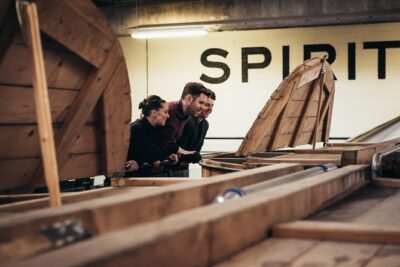
Dublin Teeling Whiskey Distillery Guided Tour and Tasting 1 Hour
Read our review →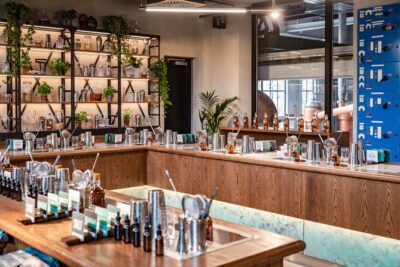
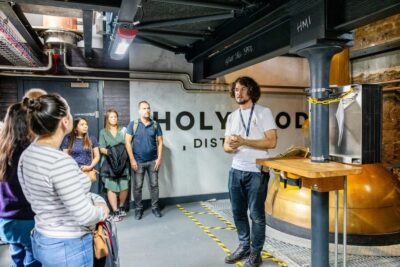
Edinburgh: Holyrood Distillery Whisky & Gin Tour
Read our review →